

Eureka Editions
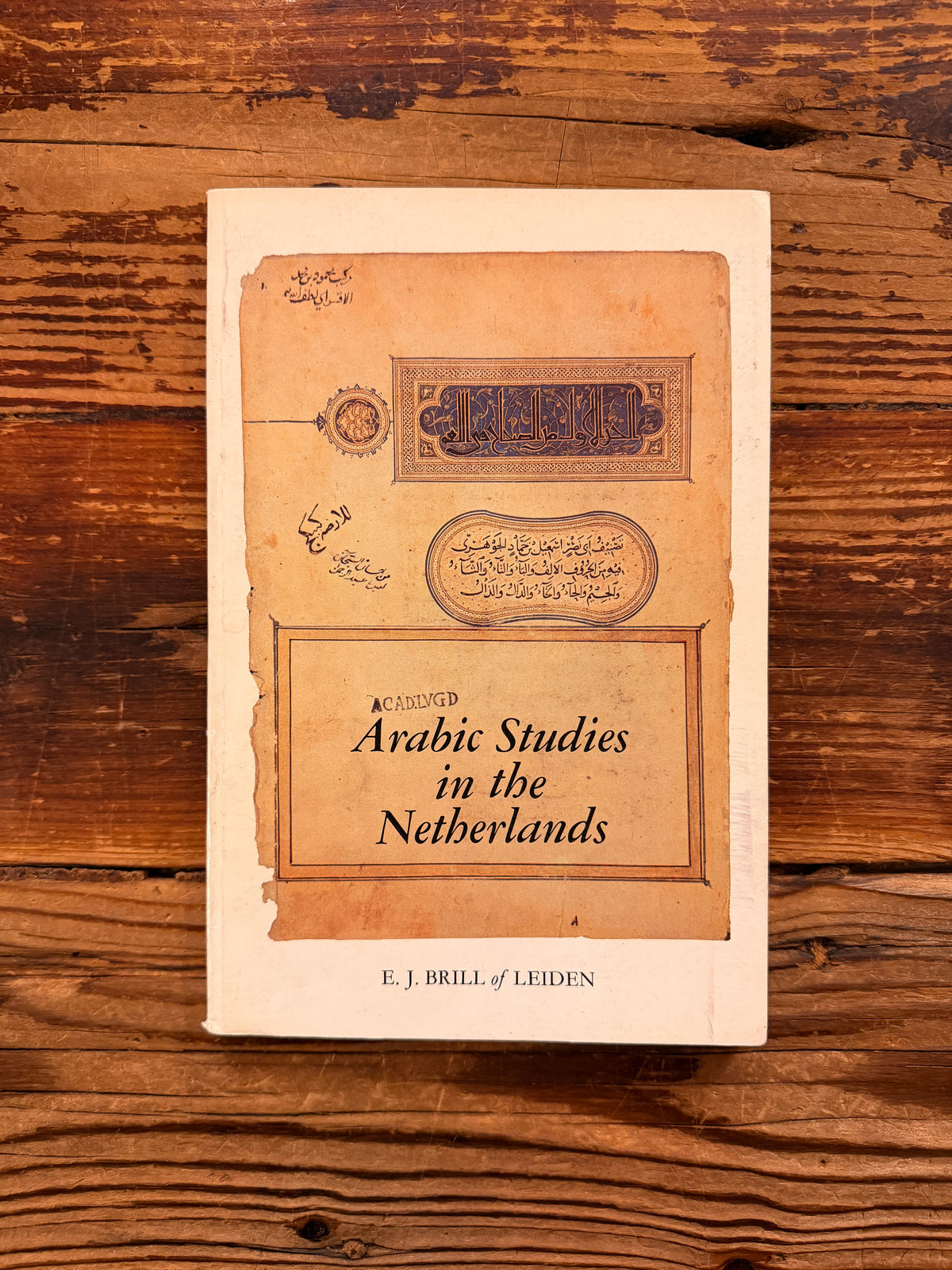
Arabic Studies in the Netherlands by J. Brugman en F. Schröder | With a note from J. Brugman
Arabic Studies in the Netherlands by J. Brugman en F. Schröder | With a note from J. Brugman

Alert me if this item is restocked.
We often restock popular items or they may be returned by the other customers. If you would like to be notified when this happens just enter your details below.
Arabic Studies in the Netherlands by J. Brugman en F. Schröder | With a note from J. Brugman
We respect your privacy and don't share your email with anybody.
Alert me if this item is restocked
Couldn't load pickup availability
Arabic Studies in the Netherlands, J. Brugman en F. Schröder
Introduction, the Netherlands came relatively late into contact with the Arab world, mainly because they much later than the other European countries achieved statehood, and civilization started in this country, at the time marshy and hence difficult to penetrate, later than elsewhere in Europe. When at-Tariq crossed the Straits of Gibraltar in 711 the inhabitants of what later was to become the Netherlands were not yet converted to Christianity. Only around 1200 the Netherlands possessed, as the Dutch historian Busken Huet wrote, 'a language (of its own), a fleet, a dynasty, a nobility, the beginnings of a middle class.'
Inhabitants of the Low Countries frequently pilgrimated to Jerusalem but these contacts with the Arab world were incidental and, as in the rest of Europe, did not promote an understanding of the Arab world. Dutch nobles also participated in the Crusades, especially the later ones. The first Count of Holland, at that time one of the many feudal potentates in the Netherlands in the I3th century, pressed by the admonitions of the Pope, played a leading role in the Crusade of Damiette (1215). When in 1292 one of the first writers who used the Dutch vernacular, Jacob van Maerlandt, in an elegy bewailed the fall of Acre, he was mainly concerned with the decline of the Church which according to him caused this event. It is clear that the territory had none or little appeal to his imagination: in his time the Crusades already belonged to a distant past.
Whatever contact there was between the Netherlands and the Arab world, apart from the pilgrimages and their rather late participation in the Crusades, took place via others. No wonder, therefore, that the Dutchmen during these centuries cherished the same prejudices against the Arab and Muslim world as the other Europeans. Their biased attitude clearly appears from the long historical poem of Van Maerlandt when he speaks of Islam. But the same poet did clearly not realize that he was using an Arabic source when he translated, via a Latin intermediary, the famous Secretum Secretorum into Dutch. For it is generally known that this work, the Sirr al-Asrar, though even by the Arabs themselves often ascribed to Aristotle, in reality was written by an Arab scholar, who probably compiled it from various sources. It was translated into many European languages and it was only natural that its fame had reached the distant Low Countries.
In the same indirect manner other Arabic works became known in the Netherlands, such as the story of Floir et Blanchefleur, which clearly has an Oriental origin and is often equated with the Arabic story of "Urwa wa'afra'. Like the translator of Sirr al-Asrar the translator of this epic does not seem to have realized its origin in spite of the Oriental background which is maintained in the European versions.
It is clear that the Arabic Muslim civilization only could become known to the Netherlands in an indirect manner, via translations and adaptations made in the countries in the South of Europe. When, therefore, one takes into consideration that the Muslim civilization even there was known only in an incomplete and fragmentary manner and that, for instance, the Popes during the Middle Ages repeatedly warned the Christians against contact with Muslims, we can only expect the Dutchmen during this period to lack almost all interest in the civilization of the Arabs.
This changed during the war of independence (1568-1648) against the Spanish king, who until that time had reigned in the Netherlands. After a succesful resistance against a prolonged siege by the Spanish troops, Leiden, then a commercial and industrial centre, was in 1574 the first to be granted a University. It was at this University that almost from its very foundation the study of Oriental languages was started, the beginning of a tradition which has continued until this day.
Details
- Paperback
- ISBN: 9004058508
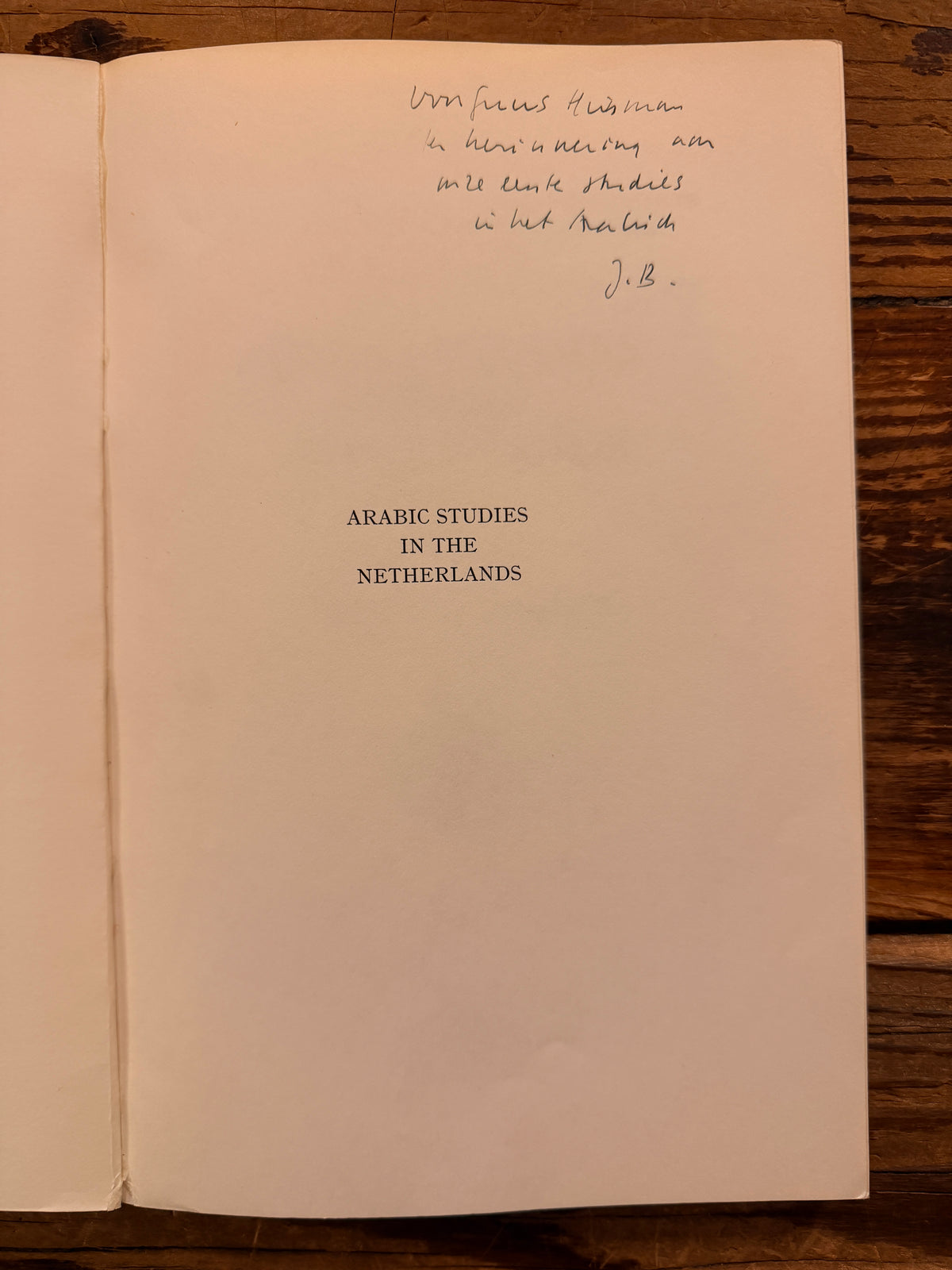
- Contains a note from the author J.Brugman on the first page
- Condition: Very Good, has a note from the author on the first page, no further notes/stamps
- Publisher: E.J. Brill of Leiden, 1979